

Galerie Wolfgang Jaenicke
An Ikẹgobọ Altar sculpture
An Ikẹgobọ Altar sculpture
Couldn't load pickup availability
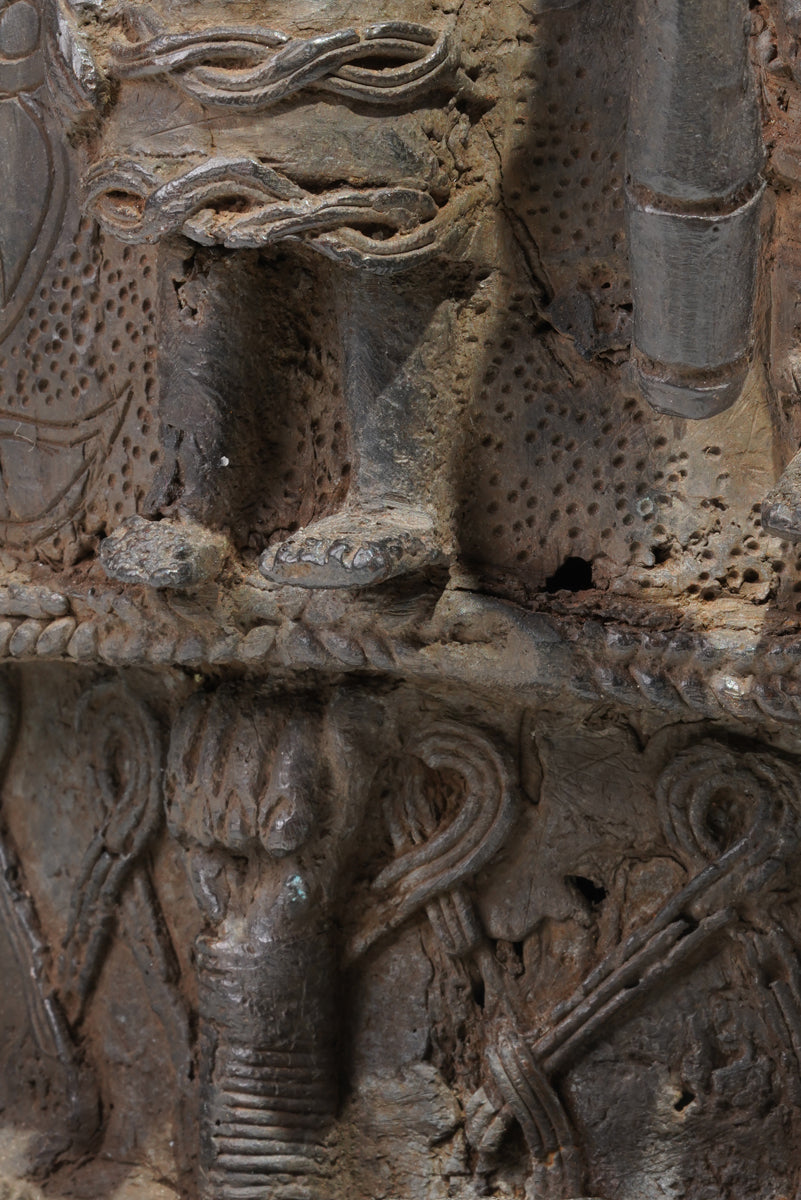
An Ikẹgobọ Altar sculpture, Nigeria, in the style of Benin, which is related zu Eheua, the "military commander", who played a central role in defeating hostile forces and restoring order to the Benin kingdom.
Ikẹgobọ are placed on ancestral altars. Typically, the Ọba, Iy’Ọba and certain privileged chiefs may use cast forms, whereas chiefs use wooden ones (Dean, 1983). Altars of the hand are cylindrical, the outer sides decorated with relief carving. They are sometimes topped with sculptural elements, elephant tusks or antelope horns, and wooden altars are topped with a conical projection which mimics a tusk. Worship of the hand is important in Edo belief; the hand relates to an individual’s success with different skills, qualities or characteristics, such as craftsmanship, hunting or warcraft.
Chief Jacob Egharevba (1949, pp.88-89) worship of the ‘god of the hand’ emerged during the fifteenth century, during the reign of Ọba Ewaure I. What is less certain is whether altars of the hand also emerged at this time, or were a later development. Today, Ikẹgobọ continue to be used on altars by individuals who have high-ranking positions within the palace societies. " Source: Digital Benin
"In the kingdom of Benin, ikegobo, or "altars to the hand," celebrate the accomplishments of exceptional individuals. The hand is associated with action and productivity, and is considered the source of wealth, status, and success for all those who depend on manual skill and physical strength. Altars of this kind are commissioned in terracotta, wood, or brass, depending on the status of the patron.
"This ikegobo is an important historical document associated with the reign of Akenzua I. In the early eighteenth century, rebellious chiefs challenged Akenzua's leadership and threatened the unity and stability of the kingdom. Ehenua, Akenzua's ezomo or military commander, played a central role in defeating these forces and restoring order to the kingdom. In recognition of his heroism and service, Akenzua presented Ehenua with an ikegobo illustrating his military triumph.
The artist who created this work, composed of a series of units, used costume, scale, and composition to denote the relative status of the figures depicted on the frieze. A monumental image of Ehenua, dressed in full military regalia and clutching trophies of war, appears at the center of a group of diminutive soldiers, attendants, and priests. Two rows of musketeers above the frieze include Portuguese soldiers, an indication of the degree to which European powers were engaged in the support of Benin's leadership at this time. A separately cast sculptural group sitting in front of these soldiers portrays Oba Akenzua in the act of performing sacrifices to his ancestors so that Ehenua will prevail and triumph over his adversaries. Finally, a carved ivory tusk, now missing, was fitted onto the brass peg between the soldiers.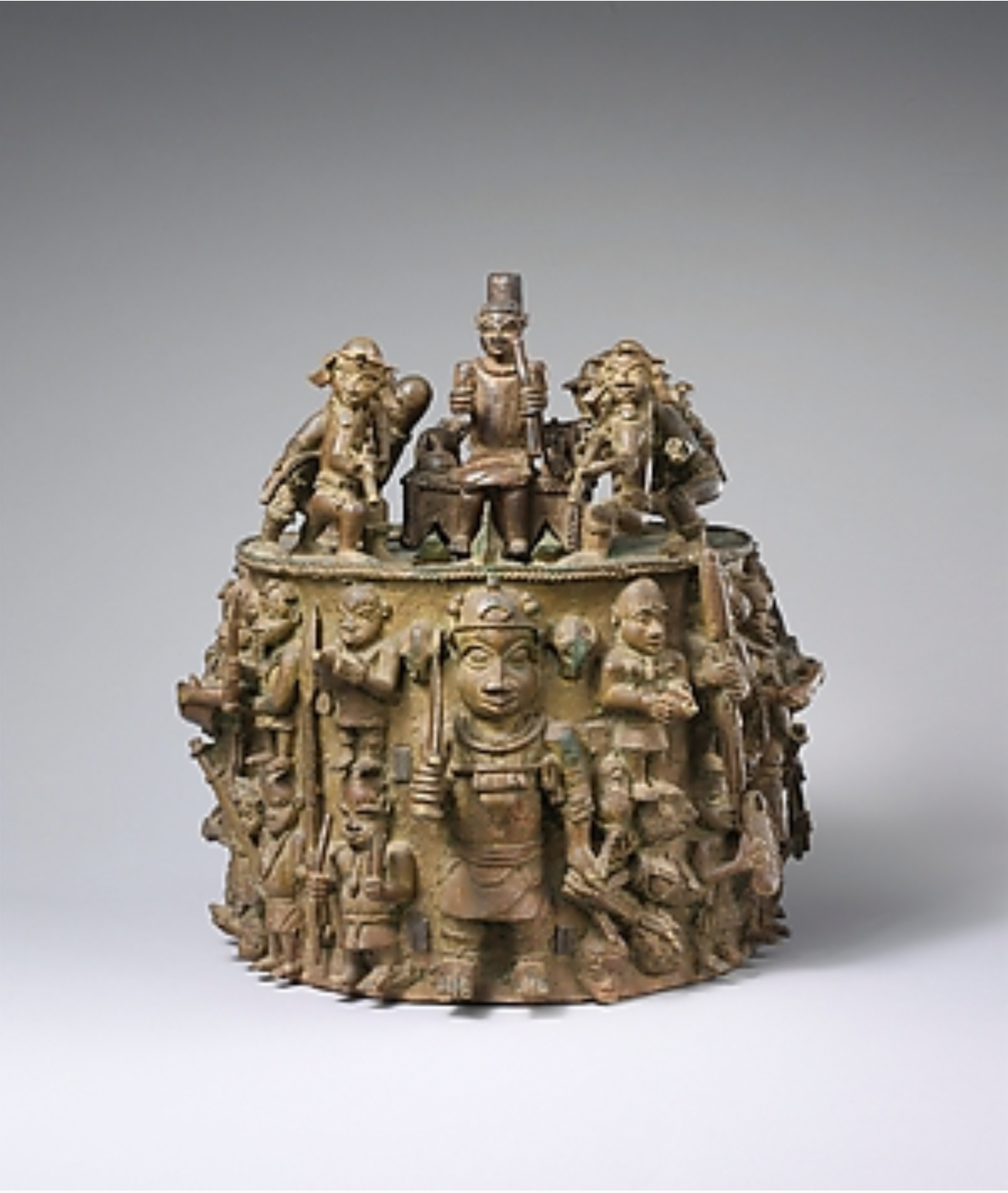
The Ikẹgobọ Altar of the MET NY
CAB39488
Height: 60 cm
Width: 36 cm
Weight: 22.,8 kg